Piles Treatment for Elderly Patients in Rohini, Delhi — Safer Options for Senior Citizens

Many elderly patients wait until the pain from piles becomes unbearable because they assume the symptoms will improve on their own. And when they finally seek help, a common concern — shared by patients and their families alike — is whether treatment is safe given their age, their other health conditions, and their medications.
The reassuring answer is that the majority of elderly patients with piles can be effectively and safely treated — often without any anaesthesia at all. Modern non-surgical options, particularly IRC (Infrared Coagulation), are specifically well-suited for senior citizens with comorbidities like diabetes, hypertension, and cardiac conditions.
Dr. Sushil Goyal has been treating elderly piles patients at Goyal Piles Care Centre in Rohini since 1989. This article covers why piles become more common with age, what treatment options are safest for senior citizens, and what families can do to help an elderly parent or relative get the right care.
Why Piles Become More Common as We Age
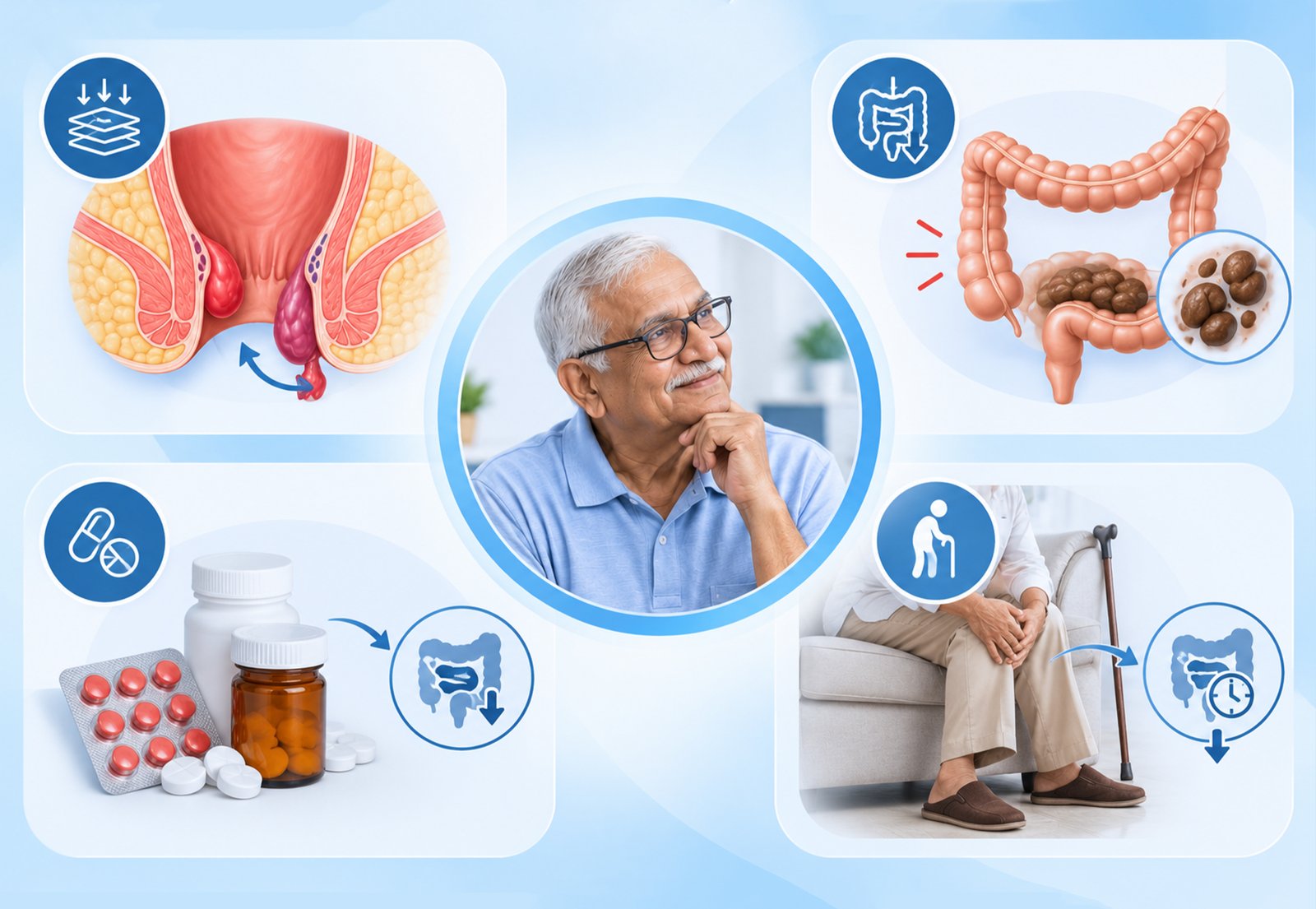
Piles are common across all age groups, but their frequency and severity tend to increase with age. Several factors explain this:
Weakening of supportive tissue. The ligaments and connective tissue that hold haemorrhoidal cushions in their correct anatomical position weaken with age. This is why older patients often present with more significant prolapse than younger patients with the same duration of symptoms.
Reduced bowel motility. Constipation becomes more common in older adults due to reduced physical activity, lower dietary fibre, and slower digestive function. Constipation and straining are the primary mechanical triggers for piles — and both are more prevalent in the elderly.
Medications. Many senior citizens take medications — iron supplements, calcium channel blockers, opioid pain medications, certain antidepressants — that cause or worsen constipation as a side effect. This directly increases haemorrhoidal pressure with every bowel movement.
Reduced mobility. Reduced walking and physical activity slows bowel transit significantly. Many elderly patients in Rohini with mobility limitations or post-surgical restricted activity develop or worsen piles as a consequence.
Previous piles that were never properly treated. Many elderly patients arrive with haemorrhoids they have had for years — managing with cream, tolerating the discomfort, and attributing it to age. These long-standing haemorrhoids have often progressed from Grade I or II to Grade III or IV by the time they are formally assessed.
The Special Concerns of Treating Elderly Piles Patients
Older patients often have diabetes, hypertension, or heart disease. Because of these conditions, conventional surgery may involve longer recovery periods and greater discomfort, and anaesthesia carries higher risk.
The concerns that elderly patients and their families most commonly bring to a first consultation at Goyal Piles Care Centre:
- Anaesthesia risk. General anaesthesia carries significantly higher risk in older patients — particularly those with cardiac conditions, respiratory disease, or poorly controlled diabetes. This is a legitimate concern, and it is precisely why the anaesthesia-free options available at our clinic are so valuable for this patient group.
- Bleeding risk from anticoagulants. Many elderly patients are on blood-thinning medications — warfarin, aspirin, newer anticoagulants like apixaban or rivaroxaban — for cardiac or stroke prevention. Any procedure must account for anticoagulation status. IRC is particularly well-suited for anticoagulated patients because it is essentially bloodless.
- Delayed healing. Wound healing slows with age. Open surgical wounds in the perianal area — particularly in diabetic patients — carry higher infection risk and longer healing times than in younger patients.
- Confusion about symptoms. Some elderly patients attribute rectal bleeding to their piles without investigation, when in a patient over 60, rectal bleeding should always be properly assessed to rule out other causes. At Goyal Piles Care Centre, we ensure examination is thorough — not assumed.
- Family as the decision-maker. For many elderly patients in Rohini, it is an adult child, spouse, or family member who researches options, books the appointment, and accompanies the patient. This article is as much for you, the family member, as it is for the patient.
Treatment Options for Elderly Piles Patients — Safest First
Conservative Management — Always the Starting Point for Grade I
For Grade I haemorrhoids in elderly patients, conservative management is the first step and is safe regardless of any comorbidity:
- High-fibre diet — dals, dalia, oats, fruits, vegetables daily. Soft, bulky stools reduce straining with each bowel movement. Our diet guide covers Indian foods that achieve this easily.
- Adequate hydration — 2–2.5 litres of water daily, adjusted for any cardiac or renal fluid restrictions the patient has
- Warm sitz baths — 10 minutes in warm water, 2–3 times daily. Safe for all ages, reduces inflammation and discomfort
- Medication review — Dr. Sushil Goyal reviews all current medications for constipation side effects and discusses alternatives with the patient's physician where appropriate
- Gentle daily walking — 15–20 minutes daily if mobility permits, to maintain bowel motility
IRC — The Ideal Procedure for Elderly Patients
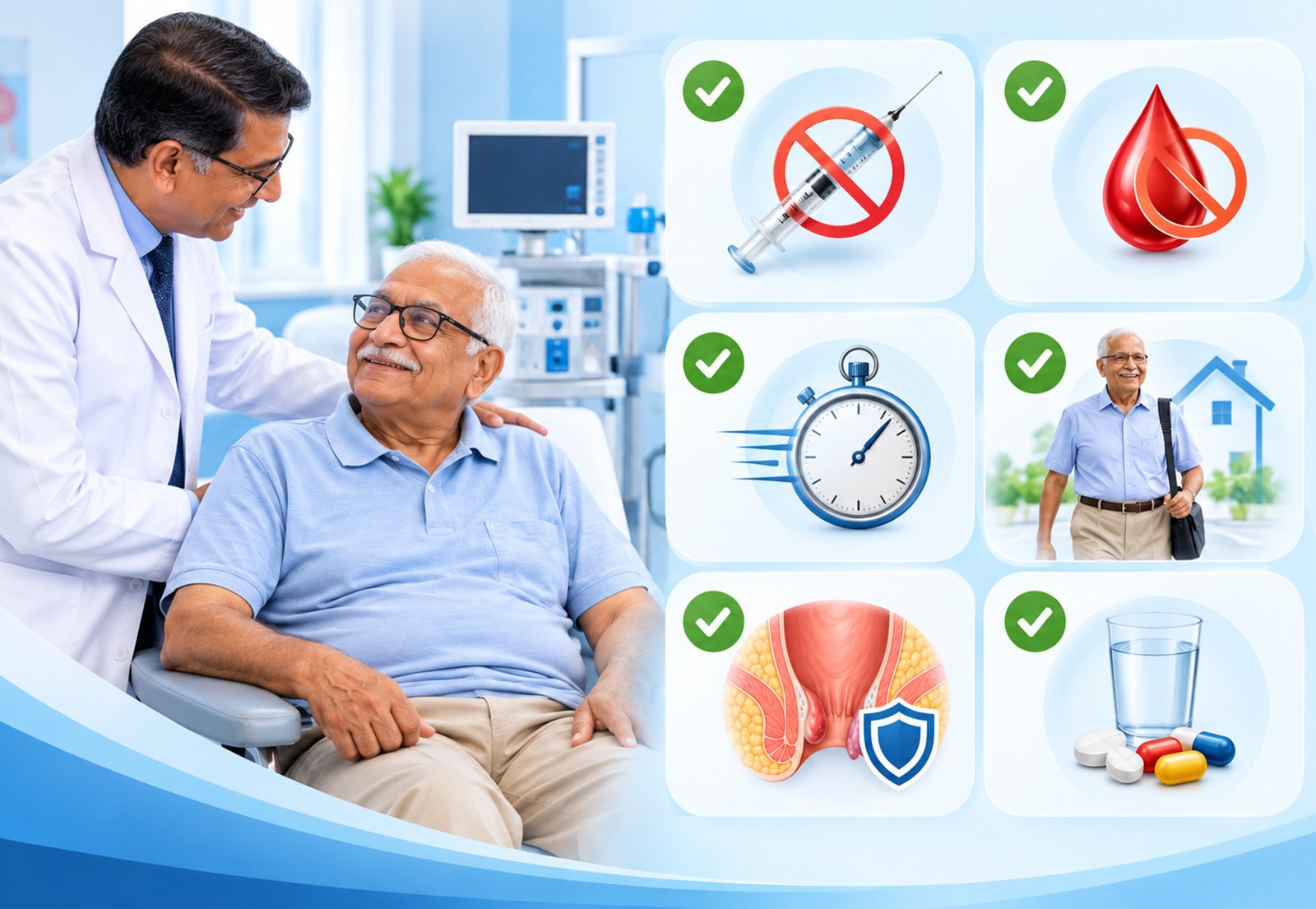
IRC (Infrared Coagulation) is the most appropriate procedural option for most elderly patients with Grade I or II haemorrhoids — for one specific reason that makes it exceptional in this patient group: it requires no anaesthesia at all.
The IRC probe contacts tissue above the dentate line, where pain nerve endings are absent in internal haemorrhoids. Most elderly patients feel only mild warmth or pressure during the procedure. There is no injection, no sedation, no general or spinal anaesthesia.
Laser treatment has become a preferred option for many senior citizens because it targets swollen tissue with greater precision without large surgical cuts. Recovery is usually smooth when patients follow medical advice carefully.
Why IRC is specifically well-suited for elderly patients:
- No anaesthesia — eliminates cardiac, respiratory, and anaesthesia risk entirely
- No blood loss — safe for patients on anticoagulants in many cases (confirmed with Dr. Goyal at consultation)
- 5–10 minutes in the clinic — no prolonged procedure time
- Same-day return home — no hospital admission, no overnight stay
- No wound — no post-operative wound care, no infection risk, no delayed healing concern
- No fasting required — patients can take their regular medications and eat normally on the day
For an elderly patient with diabetes, hypertension, or cardiac disease who has Grade I or II piles, IRC is often the safest available procedure — significantly safer than any surgical alternative, and more definitive than managing with cream.
Laser Haemorrhoidoplasty — For Grade II–III Elderly Patients
For elderly patients with Grade II or III haemorrhoids where IRC alone is not sufficient, Laser Haemorrhoidoplasty (LHP) is the next appropriate option. LHP uses a laser fibre inserted into the haemorrhoidal tissue to shrink it from within — no open wound, no stitches.
Compared to conventional surgery in an elderly patient:
- Local or spinal anaesthesia only — avoiding general anaesthesia in most cases
- Day care — no overnight admission in most cases
- No open wound in the perianal area — lower infection risk for diabetic patients
- Return to normal activity in 1–2 days
Before laser treatment in an elderly patient with significant comorbidities, Dr. Sushil Goyal reviews the patient's current medications, controlled conditions, and fitness for anaesthesia — in discussion with the patient's existing physician or cardiologist where needed.
Stapler Surgery — For Grade III–IV When Needed
For advanced Grade III or IV haemorrhoids in elderly patients where conservative or laser options are not sufficient, Stapler Surgery (MIPH) is the least invasive surgical option. It avoids an open wound in the perianal area and is performed under spinal rather than general anaesthesia.
Conventional surgery for elderly patients with comorbidities may involve higher risk — modern minimally invasive surgical alternatives are now the preferred approach for senior citizens.
For elderly patients who are not fit for any form of anaesthesia, Dr. Sushil Goyal will discuss medical management and symptom control as the appropriate approach — with honest guidance on what can realistically be achieved without a procedure.
Special Situations in Elderly Piles Patients
Diabetic Patients
Diabetes affects wound healing and immune response. For diabetic elderly patients, the strongest recommendation at Goyal Piles Care Centre is IRC — because it creates no wound to heal and carries no infection risk. Laser and surgical options are assessed on a case-by-case basis with reference to HbA1c and current diabetic control.
Before any procedure, Dr. Goyal will ask about diabetic control, current medications, and whether insulin or oral hypoglycaemics are being taken — as these affect fasting requirements and post-procedure management.
Anticoagulated Patients
Patients on warfarin, aspirin, clopidogrel, or newer blood thinners for cardiac or stroke prevention require careful management around any procedure. IRC is generally the safest option for anticoagulated patients because it is essentially bloodless. For laser or surgical procedures, anticoagulation management is discussed with the patient's cardiologist before scheduling.
Never stop blood-thinning medications before a procedure without guidance from the prescribing physician. At Goyal Piles Care Centre, this coordination is managed before any procedure is scheduled.
Cardiac Patients
For patients with a history of heart disease, angioplasty, bypass surgery, or pacemaker implantation — any procedure is assessed in the context of cardiac risk. IRC requires no anaesthesia and can often be safely performed in cardiac patients without any modification. Laser under local or spinal anaesthesia is assessed individually.
Mobility-Limited Patients
Patients who cannot easily travel frequently benefit from the speed of IRC — multiple haemorrhoids are typically treated across 2–3 visits spaced weeks apart, minimising travel burden. For patients who genuinely cannot travel easily, Dr. Sushil Goyal can discuss the consultation and examination process and whether a family member can help facilitate the visit.
What Families of Elderly Piles Patients Should Know
If you are reading this on behalf of a parent, grandparent, or elderly relative with piles symptoms, several things are worth knowing:
Piles in the elderly do not simply go away. The connective tissue changes of ageing mean that established haemorrhoids become more — not less — symptomatic over time without treatment. Waiting typically means the grade increases and the treatment required becomes more significant.
IRC is very well tolerated by elderly patients. In our experience at Goyal Piles Care Centre, elderly patients who were most anxious about treatment before their appointment are often the most surprised by how manageable IRC is. The absence of any needle or anaesthesia, the brevity of the procedure, and the immediate return home make it far less daunting than they expected.
The consultation itself is not frightening. A 20-minute examination at Goyal Piles Care Centre is a clinical discussion and a brief physical examination. Dr. Sushil Goyal is experienced in working with elderly patients who have multiple conditions, multiple medications, and varying degrees of mobility.
Bring a list of medications. At the consultation, Dr. Goyal will review all current medications — particularly blood thinners, diabetes medications, cardiac medications, and any supplements — to ensure treatment is planned appropriately.
Frequently Asked Questions
Is piles treatment safe for a 70-year-old with diabetes and blood pressure?
In most cases, yes — particularly IRC, which requires no anaesthesia, no wound, and is essentially bloodless. IRC is specifically well-suited for elderly patients with diabetes, hypertension, and cardiac conditions. Dr. Sushil Goyal reviews all current medications and conditions at the consultation before recommending any procedure.
Can an elderly patient have piles treatment while on blood thinners?
IRC is generally compatible with anticoagulant therapy because it is a bloodless procedure. Laser and surgical procedures require anticoagulation management in coordination with the prescribing cardiologist or physician. Never stop blood-thinning medications without medical guidance. Mention all blood thinners at the time of booking.
What is the recovery time for piles treatment in elderly patients?
After IRC: no recovery period — patients return home the same day and resume normal activity. After laser haemorrhoidoplasty: 1–2 days for normal activity in most elderly patients. After stapler surgery: 5–7 days. Healing may be slightly slower in elderly patients with diabetes — Dr. Sushil Goyal discusses realistic expectations at consultation.
Can my elderly parent be treated at Goyal Piles Care Centre without an overnight hospital stay?
IRC is entirely an outpatient procedure — no admission, no overnight stay. Laser haemorrhoidoplasty is day care — patients return home the same day in most cases. Stapler surgery typically requires one overnight admission. For patients with limited mobility, Dr. Sushil Goyal will discuss which option minimises disruption most effectively.
My elderly father has had piles for many years. Is it too late to treat?
It is never too late to assess and treat piles — even in patients who have had the condition for years. Long-standing haemorrhoids may be at a higher grade, which affects which treatment options are most appropriate, but treatment is not withheld based on age or duration of symptoms alone.
Book an Assessment at Goyal Piles Care Centre, Rohini
Dr. Sushil Goyal has been treating elderly piles patients at Goyal Piles Care Centre since 1989. The clinic in Sector 8, Rohini is accessible by metro (Rohini East, Gate 2 — 5-minute walk) and by auto-rickshaw from across Rohini sectors. Parking is available nearby.
If you are an elderly patient or a family member researching on behalf of an elderly relative — call or WhatsApp to discuss the patient's specific situation before booking. Dr. Goyal's team can advise whether the consultation requires any special preparation given the patient's medical history.
476 verified Google reviews at 4.7 stars. Global Excellence Award 2019 — Best Laser Centre in North India.
Address: D-12/182, First Floor, Sector 8, Rohini, Delhi – 110085 Near Rohini East Metro Station Gate 2 | Opposite Metro Pillar No. 393
Call or WhatsApp: +91-9999333166
Monday to Saturday | 9:30 AM to 1:30 PM
→ IRC treatment — no anaesthesia, same day
→ Piles treatment without surgery
→ Diet guide for piles recovery
→ Difference between piles, fissure and fistula
This article is for informational purposes only. Please consult a qualified medical professional for diagnosis and treatment personalised to your health profile.
