












Piles, Fissure and Fistula Treatment in Rohini, Delhi
Examination and treatment for piles (haemorrhoids), anal fissure, anal fistula and pilonidal sinus at Goyal Piles Care Centre, Sector 8, Rohini.
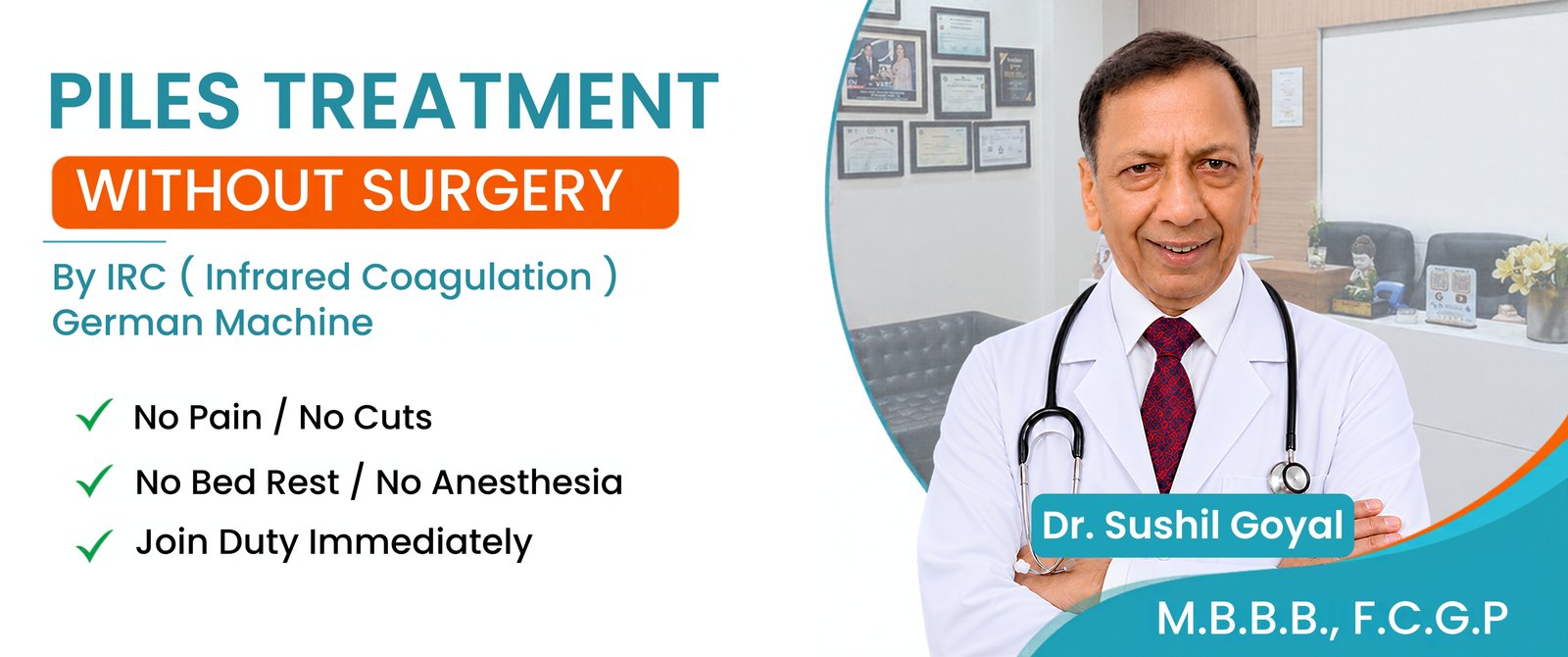
Dr. Sushil Goyal, MBBS, FCGP
Conditions We Assess and Treat
Anorectal symptoms such as bleeding, pain, itching or a lump are common, and they are often delayed because people feel uncomfortable talking about them. A clinical examination is the reliable way to find out what is causing them. Goyal Piles Care Centre assesses and treats four conditions.
Piles (Haemorrhoids)
Piles, also called haemorrhoids or bawasir, are swollen blood vessels in or around the anus. Common symptoms include bleeding after passing stool, a soft lump, itching or discomfort.
Learn more: /piles-treatmentAnal Fissure
An anal fissure is a small tear in the lining of the anal canal. It often causes sharp or burning pain during and after passing stool, sometimes with a little bleeding.
Learn more: /fissure-treatmentAnal Fistula
An anal fistula is an abnormal tunnel between the anal canal and the skin around the anus. It may cause recurring discharge, pain or boil-like swelling.
Learn more: /fistula-treatmentPilonidal Sinus
A pilonidal sinus is a small pit or tunnel in the skin near the tailbone. It may cause swelling, pain or discharge.
Learn more: /pilonidal-sinus-treatmentNot Sure What Your Symptom Means?
This guide is for general understanding only. It is not a diagnosis.
| What you notice | A condition that may be involved |
|---|---|
| Bright red blood on tissue paper or in the toilet after passing stool, a soft lump, or itching | Piles (haemorrhoids) |
| Sharp or burning pain during and after passing stool | Anal fissure |
| Discharge, a recurring boil-like swelling or a sore near the anus | Anal fistula or abscess |
| Pain, swelling, a pit or discharge near the tailbone | Pilonidal sinus |
Symptoms overlap, and more than one condition can occur together. Rectal bleeding should not be assumed to be piles without an examination. Seek urgent medical help for heavy bleeding, dizziness or fainting, black stools, fever with anal swelling, or severe pain.
What Happens at Your First Visit
The doctor asks about your symptoms, how long you have had them, your bowel habits and any earlier treatment.
A visual check of the area, followed by a brief proctoscopy (a small lighted instrument) where needed. Most people feel pressure or mild discomfort. The examination is short.
You are told what is causing your symptoms and, for piles, the grade.
The options that may suit your condition, what each involves, the possible benefits and risks, and the next steps. You can ask questions and decide at your own pace.
The visit usually takes about half an hour, though this varies. Please bring any earlier reports and prescriptions and a list of your current medicines. Tell the doctor if you have diabetes, heart disease or take blood thinners.
Treatment Options Your Surgeon May Discuss
Treatment depends on your diagnosis, the grade or extent of the condition, your symptoms and your general health. Many people begin with lifestyle changes and medicines. Where a procedure is considered, these are the options commonly discussed.
| Option | Commonly discussed for | Anaesthesia | Notes |
|---|---|---|---|
| Lifestyle changes and medicines | Early or mild symptoms | Not needed | Fibre, fluids, toilet habits and medicines as prescribed |
| IRC (infrared coagulation) | Certain early-grade internal piles | Often not needed; the surgeon advises | Done as an outpatient procedure. Number of sessions and suitability vary |
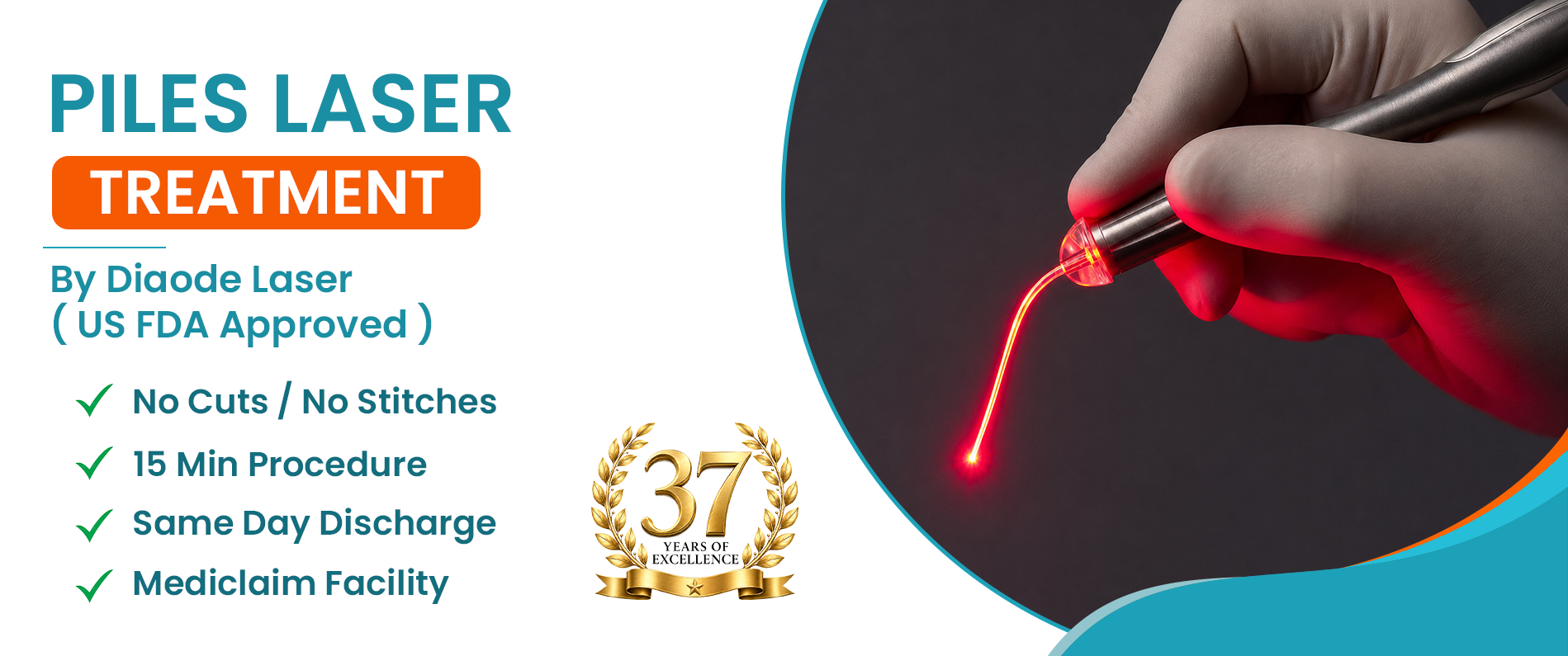
| Laser procedures | Selected cases of piles, fissure, fistula or pilonidal sinus | Local or spinal, depending on the case | Often day care. Suitability depends on the condition and its extent |
| Stapler or conventional surgery | Advanced piles or more complex cases | Spinal or general, depending on the case | A hospital stay may be needed |
This is a general comparison. Whether any procedure is needed, which one suits you, how long recovery takes, and the possible benefits and risks vary between patients. Your surgeon will explain these for your case after examination.
About Dr. Sushil Goyal
Dr. Sushil Goyal, MBBS, FCGP, is a doctor who assesses and treats piles, fissure, fistula and pilonidal sinus at Goyal Piles Care Centre in Rohini, Delhi.
Patient Education
Plain-language guides written by Dr. Sushil Goyal. They are for general information and do not replace an examination.
Frequently Asked Questions
How do I know whether I have piles?
Bleeding after passing stool, a soft lump near the anus, itching or discomfort can be signs of piles, but other conditions cause similar symptoms. A clinical examination confirms the cause.
Is rectal bleeding always piles?
No. Piles are a common cause, but bleeding can come from other conditions, including a fissure or problems higher in the bowel. Any rectal bleeding should be examined, particularly if you are over 40, the bleeding continues, or your bowel habits have changed.
Do all piles need surgery?
No. Early piles are often managed with lifestyle changes and medicines. If a procedure is considered, the choice depends on the grade, your symptoms and your general health, and your surgeon will discuss the options.
Is the examination painful?
The examination is brief. Most people feel pressure or mild discomfort rather than pain. If you have a painful fissure or swelling, tell the doctor so the examination can be done as gently as possible.
What foods may irritate a fissure?
Foods that lead to constipation or hard stools can irritate a fissure, such as low-fibre and highly processed foods. Fibre-rich food and enough water generally help keep stools soft. Needs differ between people, so follow your doctor's advice.
How long is the rest period after piles treatment?
It depends on the type of treatment, the grade of piles, the anaesthesia used and your general health. Your surgeon will give you a personal recovery plan after assessment.
Is laser treatment suitable for a fissure?
Laser is one of the options used for anal fissure. Whether it is suitable depends on the type of fissure, your symptoms, earlier treatment and your health. Like any procedure, it has potential benefits and risks, and these should be discussed before making a decision.