Diet After Piles Treatment — What to Eat, What to Avoid, and a 30-Day Recovery Guide
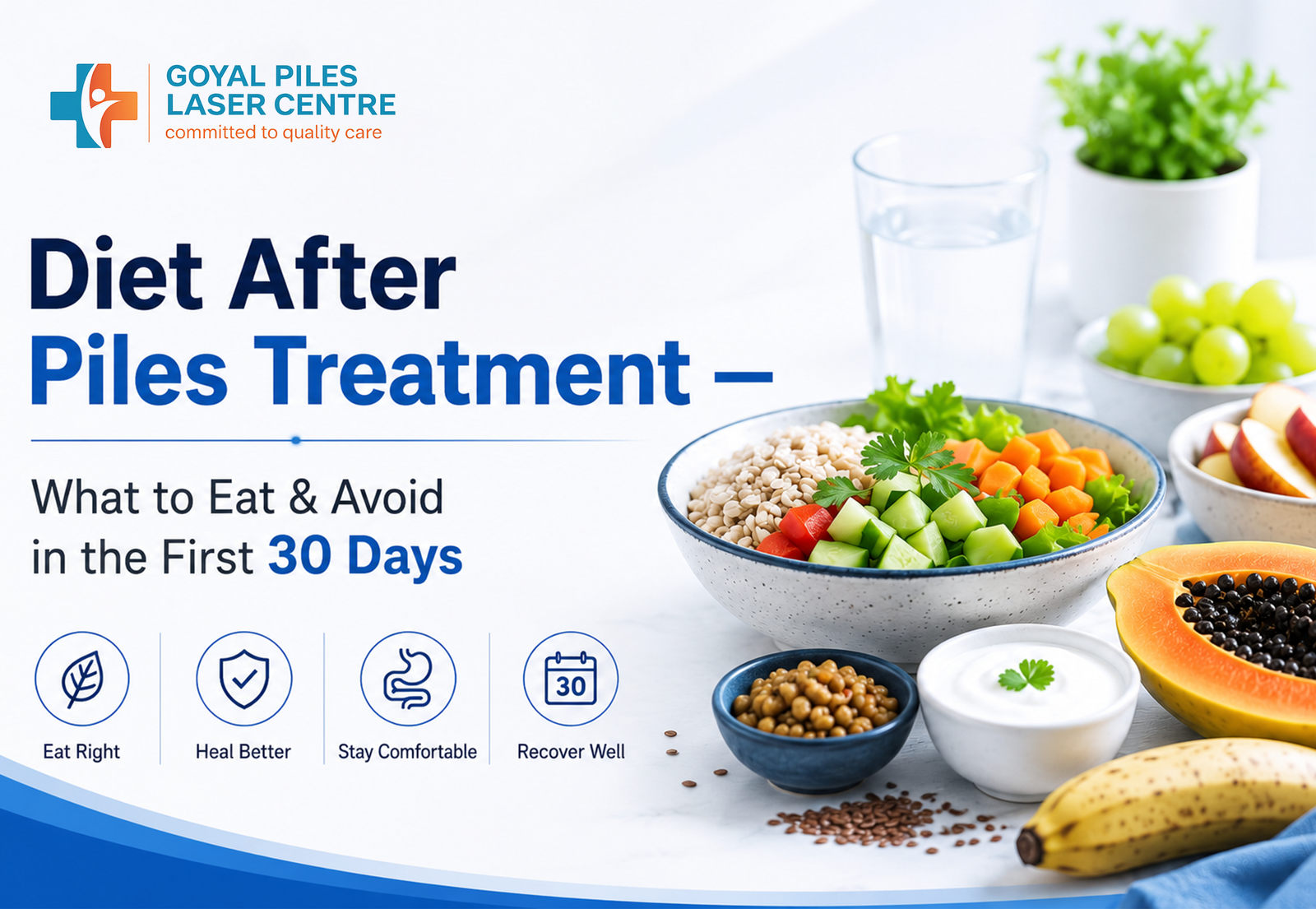
After piles treatment — whether IRC or laser treatment — what you eat over the next few weeks directly determines how comfortably you recover and how long your results last.
Most patients focus on the procedure itself and give little thought to diet. Then they go home and eat what they normally eat, strain during the first bowel movement, and wonder why recovery is more uncomfortable than expected. Diet is not a secondary concern after piles treatment. It is one of the primary factors in recovery quality.
This guide, based on 37 years of post-treatment dietary guidance at Goyal Piles Laser Centre in Rohini, tells you exactly what to eat, what to avoid, and when — with Indian food names and a sample day meal plan.
How Long Your Diet Matters — And Why
The goal of post-treatment diet is simple: produce soft, bulky stools that pass easily without straining. Straining puts pressure on the treated area — whether a healing haemorrhoid after IRC, a treated tissue channel after laser, or a surgical wound after haemorrhoidectomy. That pressure slows healing and can reactivate bleeding.
The duration of dietary care depends on the procedure:
| Procedure | Careful Diet Period | When Normal Eating Resumes |
|---|---|---|
| IRC | 2–3 days | Day 3–4 onwards |
| Laser Haemorrhoidoplasty (LHP) | 7–10 days | End of Week 1 |
| Laser Treatment | 2–3 weeks | After first follow-up |
| Open Haemorrhoidectomy | 3–4 weeks | After wound review |
The Core Principles — What Your Diet Must Do
Regardless of which procedure you had, your post-treatment diet needs to achieve four things:
- Keep stools soft — soft stools pass without straining, protecting the healing tissue. Hard, compact stools are the enemy of piles recovery.
- Keep stools bulky — bulky stools require less pushing and pass more smoothly. Fibre creates bulk by absorbing water and swelling in the digestive tract.
- Keep the bowel moving regularly — constipation causes extreme pressure when the bowel eventually does move. Preventing constipation is as important as choosing the right foods.
- Reduce inflammation — certain foods worsen swelling and irritation in the anorectal area. These must be avoided while healing is underway.
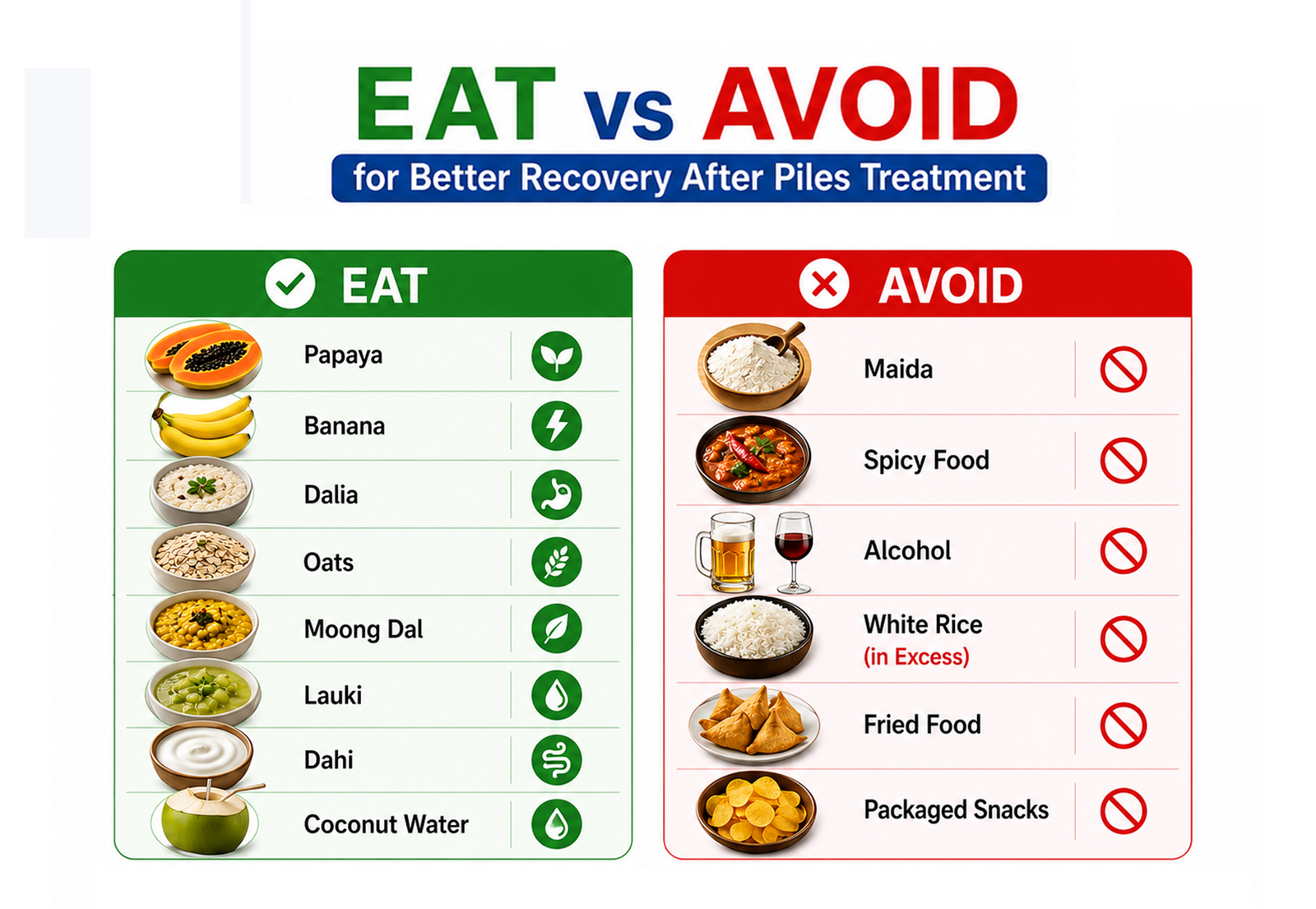
What to Eat After Piles Treatment — The Complete Indian Food List
High-Fibre Foods (Your Foundation)
Aim for 25–35 grams of dietary fibre per day. This is the clinical target recommended by gastroenterologists and consistently achievable on an Indian diet.
Dals and legumes: Moong dal (split green gram), Masoor dal (red lentil), Chana dal, Rajma (kidney beans)
Vegetables: Lauki (bottle gourd), Tinda, Parwal, Turai, Spinach, Broccoli, Carrot, Beet
Fruits: Papaya, Banana (ripe), Kiwi, Pear (nashpati), Apples
Whole grains: Dalia (broken wheat), Oats, Brown rice, Jowar and bajra rotis
Hydration — The Most Underestimated Factor
Fibre without water makes constipation worse, not better. Target: 2.5 to 3 litres of fluid per day during the recovery period.
Best fluid choices: Plain water, Coconut water, Buttermilk (chaas), Clear soups and dal water, Fresh fruit juices (without sugar)
Probiotics — Dahi and Cultured Foods
Dahi (plain, unflavoured) — one bowl daily from Day 2 onwards is beneficial for most patients. It aids bowel regularity, reduces gas, and helps re-establish gut microbiome balance. Avoid flavoured or sweetened yoghurt.
Healthy Fats and Protein
Good protein sources: Moong dal, Eggs (boiled or scrambled), Paneer, Fish (steamed or lightly cooked)
Use minimal oil in cooking during recovery. Ghee in small amounts (1 teaspoon per meal) is acceptable and may actually aid digestion.
What to Avoid After Piles Treatment
Foods That Cause Hard Stools
Maida (refined flour): White bread, naan, biscuits, cakes, pav — produces small, compacted stools that require straining. This is the single most important food to avoid during recovery.
White polished rice: Significantly lower fibre than brown rice. Switch to brown rice or reduce quantity and compensate with extra dal and vegetables.
Bananas (unripe): Ripe bananas are beneficial. Unripe bananas contain resistant starch that slows bowel movement.
Dairy in excess: Milk, cheese, and paneer in large amounts can slow bowel movement.
Foods That Irritate the Anal Area
Spicy food: Chilli-heavy curries, rasam with excess chilli, spicy street food. Capsaicin exits the body as an irritant and significantly worsens pain during healing.
Alcohol: Dehydrates the body, dilates blood vessels (increasing bleeding risk), and interferes with medications. Avoid completely during recovery.
Caffeine: Tea and coffee in large quantities can contribute to dehydration. 1–2 cups of light tea per day is acceptable; strong tea or coffee in excess should be reduced.
Ultra-Processed and Low-Fibre Foods
Instant noodles, packaged snacks, ready-to-eat meals, refined breakfast cereals — avoid completely during recovery.
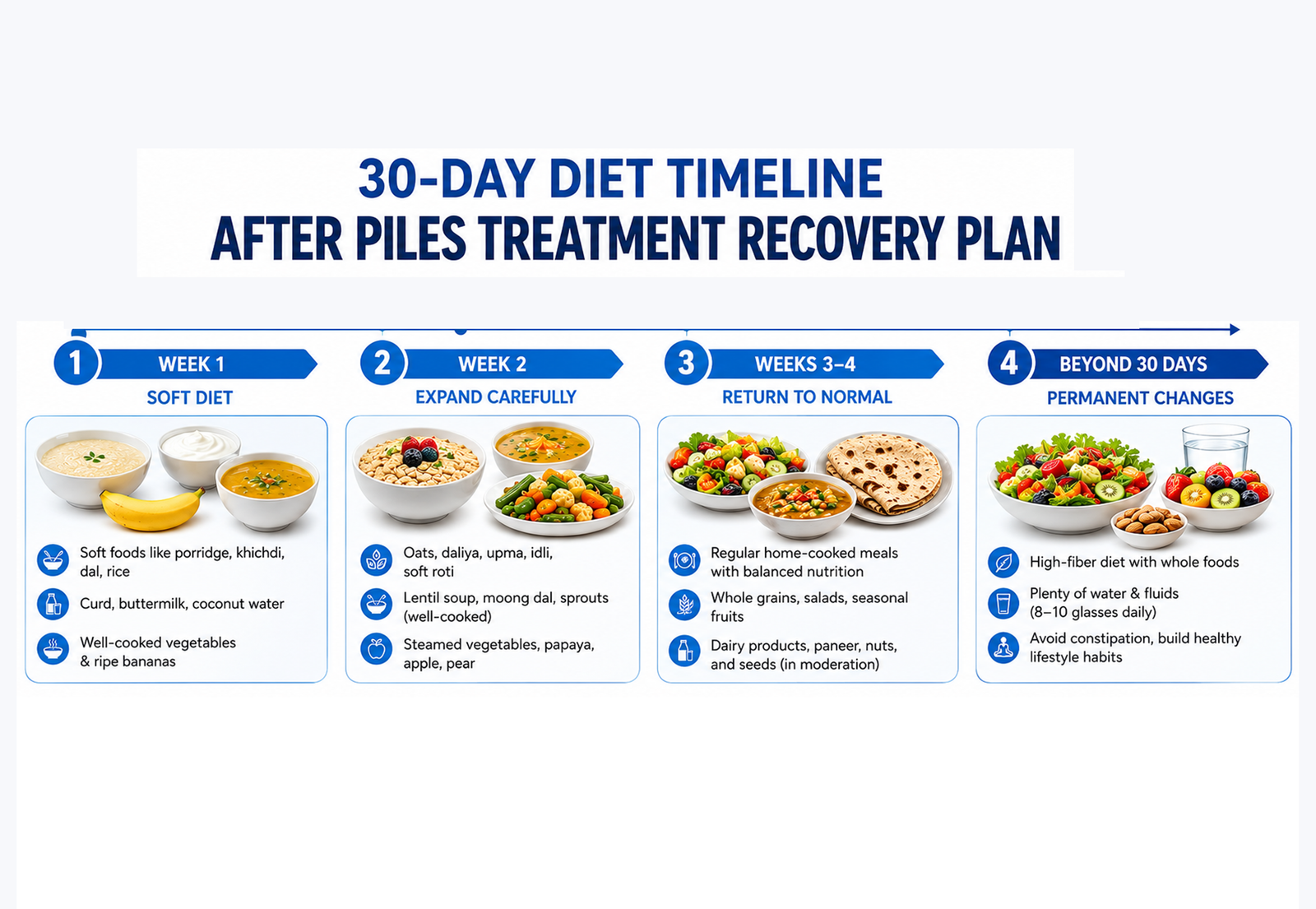
30-Day Recovery Diet Timeline
Week 1 — Soft, Gentle Diet (All Procedures): Focus entirely on soft, easily digestible, high-fibre foods. Avoid anything that requires straining.
Allowed: Moong dal khichdi, dalia, oat porridge, ripe banana, papaya, steamed vegetables, curd, coconut water, soft boiled eggs, chaas, brown rice with dal water
Week 2 — Expanding Cautiously (IRC and Laser Patients): Now reintroduce: Chana dal, rajma, sabzi with mild spices, roti, cooked salad, lean protein (fish, chicken — lightly cooked), fresh fruit with skin
Weeks 3–4 — Return to Normal (With Permanent Changes): Normal eating can resume by Week 3 with permanent dietary changes emphasising high fibre, hydration, limited maida, and limited processed/fried food.
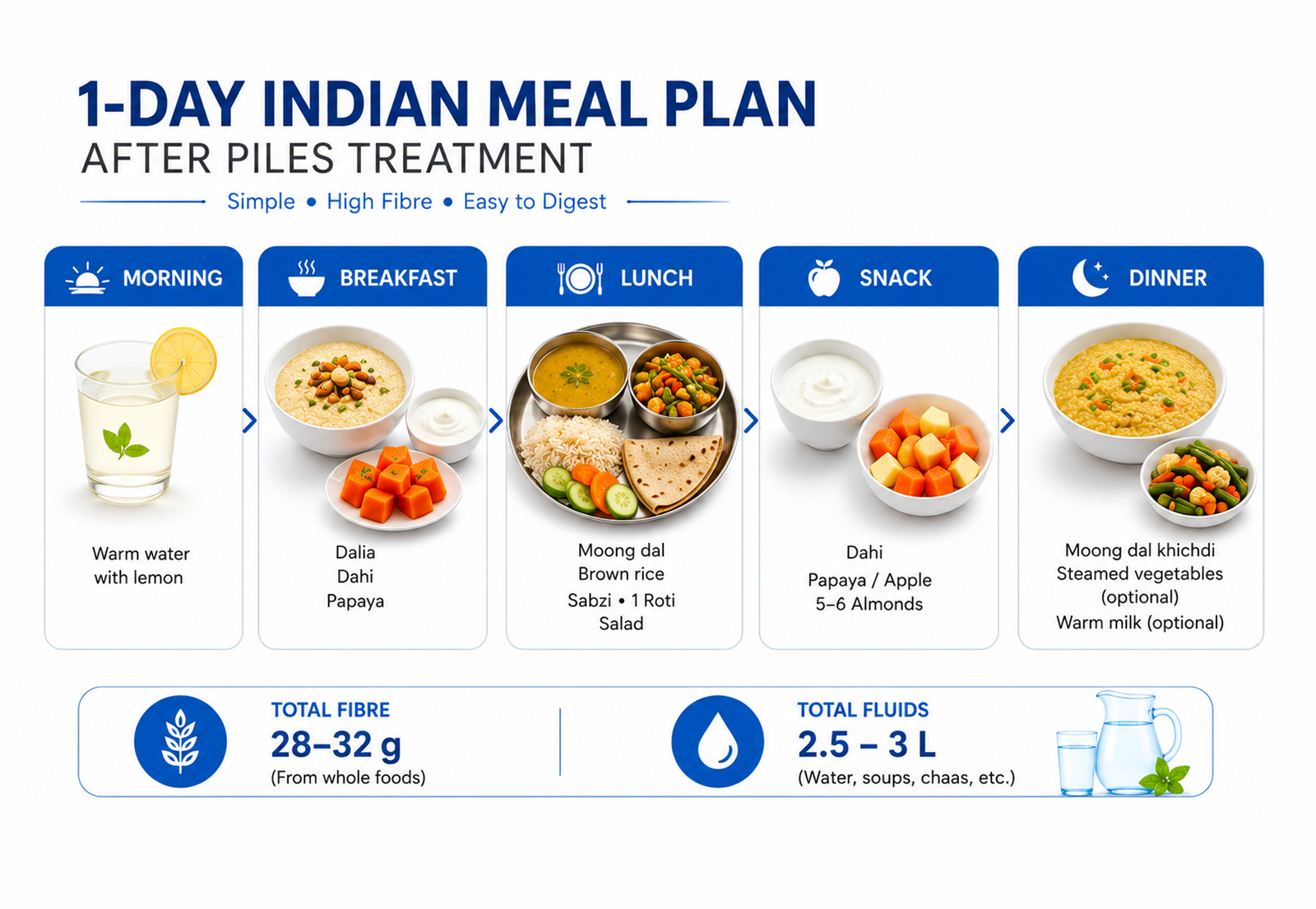
Sample 1-Day Indian Meal Plan (Week 1)
Early morning (7 AM): 2 glasses of warm water with a squeeze of lemon
Breakfast (8:30 AM): Dalia porridge (1 bowl), 1 ripe banana, 1 glass coconut water
Mid-morning (11 AM): 1 bowl papaya pieces, 1 glass chaas
Lunch (1 PM): Moong dal (1 large serving), Steamed lauki sabzi, Brown rice (1 medium serving), Dahi (1 small bowl)
Afternoon (4 PM): Whole grain biscuits or a pear/apple, 1 glass warm water
Dinner (7:30 PM): Dalia or oat khichdi (1 bowl), Steamed carrots or parwal, 1 glass warm water before sleeping
Total estimated fibre: Approximately 28–32 grams ✓
Total estimated fluid: Approximately 2.5–3 litres ✓
When to Call the Clinic After Treatment
Contact Goyal Piles Laser Centre if you experience:
- Heavy or persistent bleeding from the anal area
- Inability to pass stools for more than 3 days despite dietary measures
- Severe pain that is increasing rather than improving
- Fever above 38°C
- Swelling or discharge that worsens after Day 3
For minor constipation in the first week, increasing water intake and adding isabgol (psyllium husk) to a glass of water at bedtime is generally helpful — but confirm with Dr. Sushil Goyal before taking any supplement.
Frequently Asked Questions
Q: Can I eat dahi (curd) after piles treatment?
Yes — plain, unflavoured dahi is one of the best foods after piles treatment. One bowl daily provides probiotics that support gut health. Avoid sweetened or commercially processed yoghurt.
Q: How long should I avoid spicy food after laser piles treatment?
After Laser Haemorrhoidoplasty, avoid heavily spicy food for at least 7–10 days. Mild spice is generally acceptable from Day 5 if there is no discomfort.
Q: Can I eat rice after piles surgery?
Yes, but prefer brown rice over polished white rice during recovery. White rice has had most of its fibre removed. If brown rice is difficult to source, reduce white rice quantity and compensate with extra dal and vegetables.
Q: Is isabgol (psyllium husk) safe after piles treatment?
Isabgol is generally safe and helpful after piles treatment. Take one teaspoon in warm water before bedtime if stools are becoming hard. Always take it with adequate water — without water, it can worsen constipation.
Q: When can I eat normally again after piles treatment?
After IRC, normal eating can resume from Day 3–4. After laser treatment, follow the dietary plan given at follow-up. In all cases, maintain dietary improvements permanently to prevent recurrence.
The Permanent Dietary Lesson of Piles Treatment
The reason most people develop piles is the same reason they are at risk of developing them again: low fibre intake, insufficient hydration, and diets heavy in refined and processed foods. Piles treatment — whether IRC, laser, or surgery — addresses the existing haemorrhoids. It does not change the diet that caused them.
The dietary improvements you make during your 30-day recovery are the same improvements that prevent piles from returning. Many patients at Goyal Piles Laser Centre who successfully maintain a high-fibre, well-hydrated diet find that their overall digestive health improves significantly — and their piles do not return.
Contact Goyal Piles Laser Centre
If you have questions about your specific dietary needs after treatment, or have not yet had your procedure, call or WhatsApp us.
📍 D-12/182, First Floor, Sector 8, Rohini, Delhi – 110085
Near Rohini East Metro Station Gate 2 | Opposite Metro Pillar No. 393
📞 Call or WhatsApp: +91-9999333166
Monday to Saturday | 9:30 AM to 1:30 PM
→ Piles Treatment in Rohini → Best Piles Doctor → Laser Piles Treatment Cost
This article provides general dietary guidance. Always follow the specific post-procedure instructions given by your treating doctor. Dietary needs may vary depending on your individual health profile and the procedure performed.
