Anal Itching (Pruritus Ani): Causes, Self-Care and When to See a Doctor
The short answer: Itching around the anus, called pruritus ani, is common. It is a symptom, not a disease, and it has many possible causes. In many people it comes from moisture, sweat, stool residue, or irritation from over-cleaning, and not from any serious problem.
Sometimes it is linked to an anorectal condition such as piles, a fissure or a fistula, or to a skin condition, an infection or a general medical condition. If itching is severe, keeps returning, or does not settle in about three to four weeks of sensible self-care, it is worth being examined.
Hinglish mein: Gudaa ke aas-paas khujli aam hai aur yeh ek symptom hai, bimari nahi. Zyada tar logon mein yeh nami, paseena ya zyada saaf karne se hoti hai. Agar khujli zyada ho, bar-bar ho, ya 3-4 hafte mein theek na ho, to doctor ko dikhana chahiye.
What Is Anal Itching?
Pruritus ani is an itching or burning sensation in or around the anal opening. It may be worse at night, after passing stool, or after sweating. Scratching often makes it worse, because it irritates the skin further and starts an itch-scratch cycle.
The skin around the anus is thin, warm and easily irritated, which is why it reacts so readily to moisture, friction and chemicals.
Why Does the Anus Itch? Common Causes
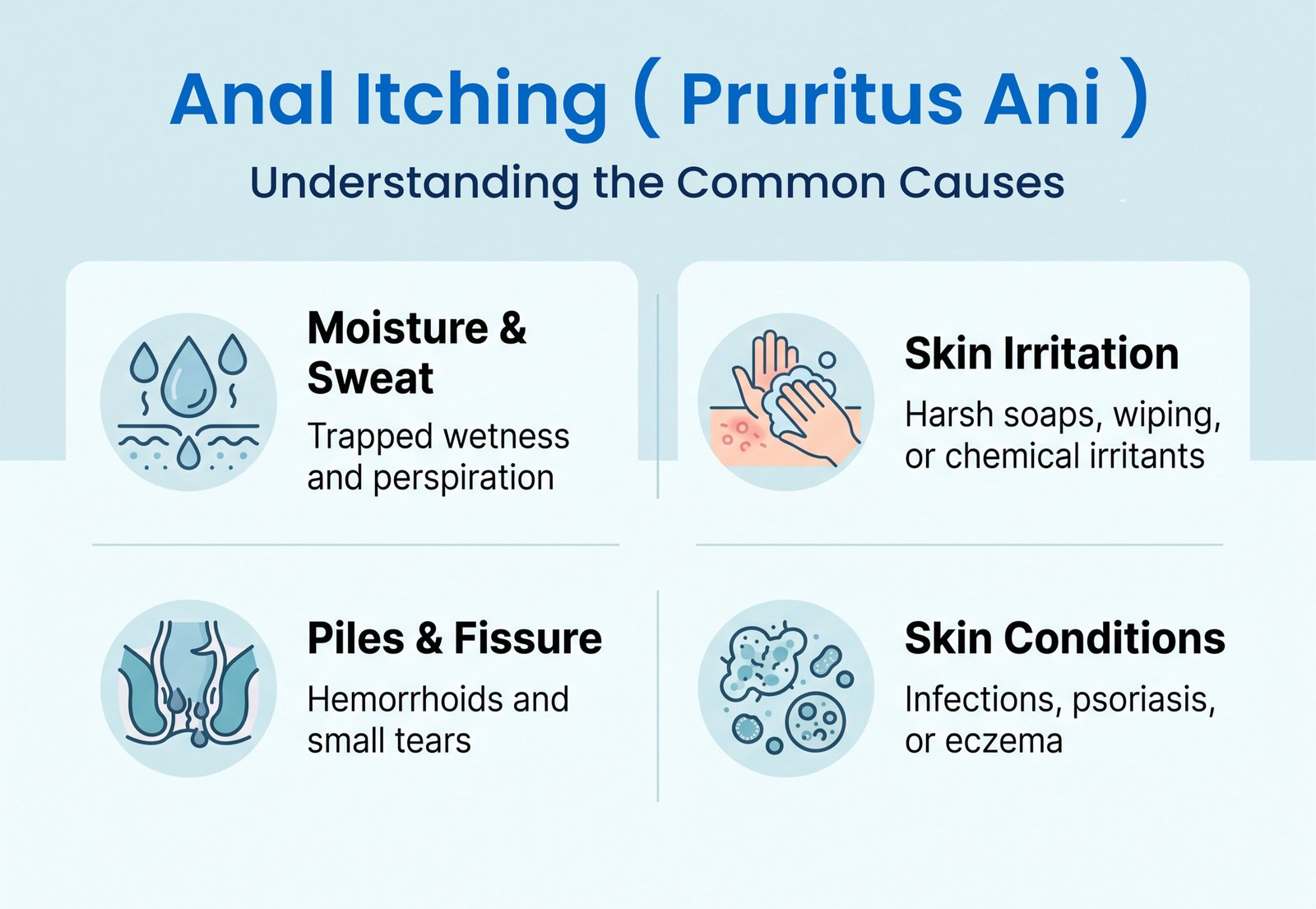
| Cause group | Examples | Clues that may point to it |
|---|---|---|
| Moisture and hygiene | Sweat, damp underwear, stool left on the skin, loose or watery stools | Itching after sweating, long days in tight clothes, or after loose stools |
| Irritation from cleaning | Over-wiping, hard scrubbing, harsh soaps, scented wipes, strong antiseptic liquids, hot water jets | Itching that begins or worsens after a new product or routine |
| Anorectal conditions | Piles, a fissure, a fistula, skin tags | Bleeding, a lump, pain, or discharge along with itching |
| Skin conditions | Eczema, contact dermatitis, psoriasis, dry skin | Redness, dry or scaly patches, or itching elsewhere on the body |
| Infections | Fungal (yeast) infection, pinworms | A rash around the anus; night-time itching, especially in children |
| General medical conditions | Diabetes and some other conditions | Other symptoms; a doctor will decide whether tests are needed |
| Diet and drinks | Some people notice a link with certain foods or drinks | Itching that follows particular meals |
| No clear cause | Called idiopathic pruritus ani | Common; often managed with skin care |
Several causes can occur together. For example, piles with mucus discharge, sweat and over-cleaning can all contribute at once.
When Itching Is Linked to Piles, a Fissure or a Fistula
Because this is an anorectal topic, it helps to know how these conditions may cause itching.
Piles (haemorrhoids): Swollen tissue and mucus discharge can leave the skin moist and irritated, and piles can make the area harder to keep clean. Itching often comes with bright red bleeding after passing stool, a soft lump, or a feeling of fullness.
Anal fissure: A small tear can cause itching as well as sharp or burning pain during and after passing stool. Scratching can itself cause a small tear.
Anal fistula: Recurring discharge from a small opening near the anus can keep the skin damp and itchy. Look out for a boil-like swelling or a sore that keeps coming back.
Skin tags: Small flaps of skin can make cleaning harder and trap moisture.
For a detailed comparison of these conditions, see our guide on the difference between piles, fissure and fistula.
Delhi-Specific Triggers
- Heat, humidity and sweat. Summer and monsoon months increase moisture around the anus, especially with long commutes, desk jobs and travel in crowded transport.
- Tight or synthetic clothing. Fabrics that trap heat and sweat keep the skin damp.
- Long sitting. Hours at a desk or on a bike seat add warmth, friction and moisture.
- Gym and sports. Sweat that stays on the skin after a workout can irritate it.
- Cleaning habits. Washing with water is common in India. Very hot water, a strong jet, harsh soaps or strong antiseptic liquids can irritate the skin, and so can leaving the area damp.
- Winter dryness. Dry air and layered clothing can dry the skin and increase itching in some people.
- Loose stools. Frequent or watery stools from stomach upsets can irritate the area.
Food and Drink
Some people notice that itching follows certain foods or drinks, such as strong tea or coffee, very spicy food or citrus. The link is not the same for everyone, and it is not established for everyone with itching.
A simple approach is to keep a food diary for two weeks and note the days when itching is worse. If a pattern appears, you can try cutting down on that item and see whether it helps. There is no need for a blanket ban. For more on this, see our article on spicy food and piles.
Self-Care That Is Generally Advised
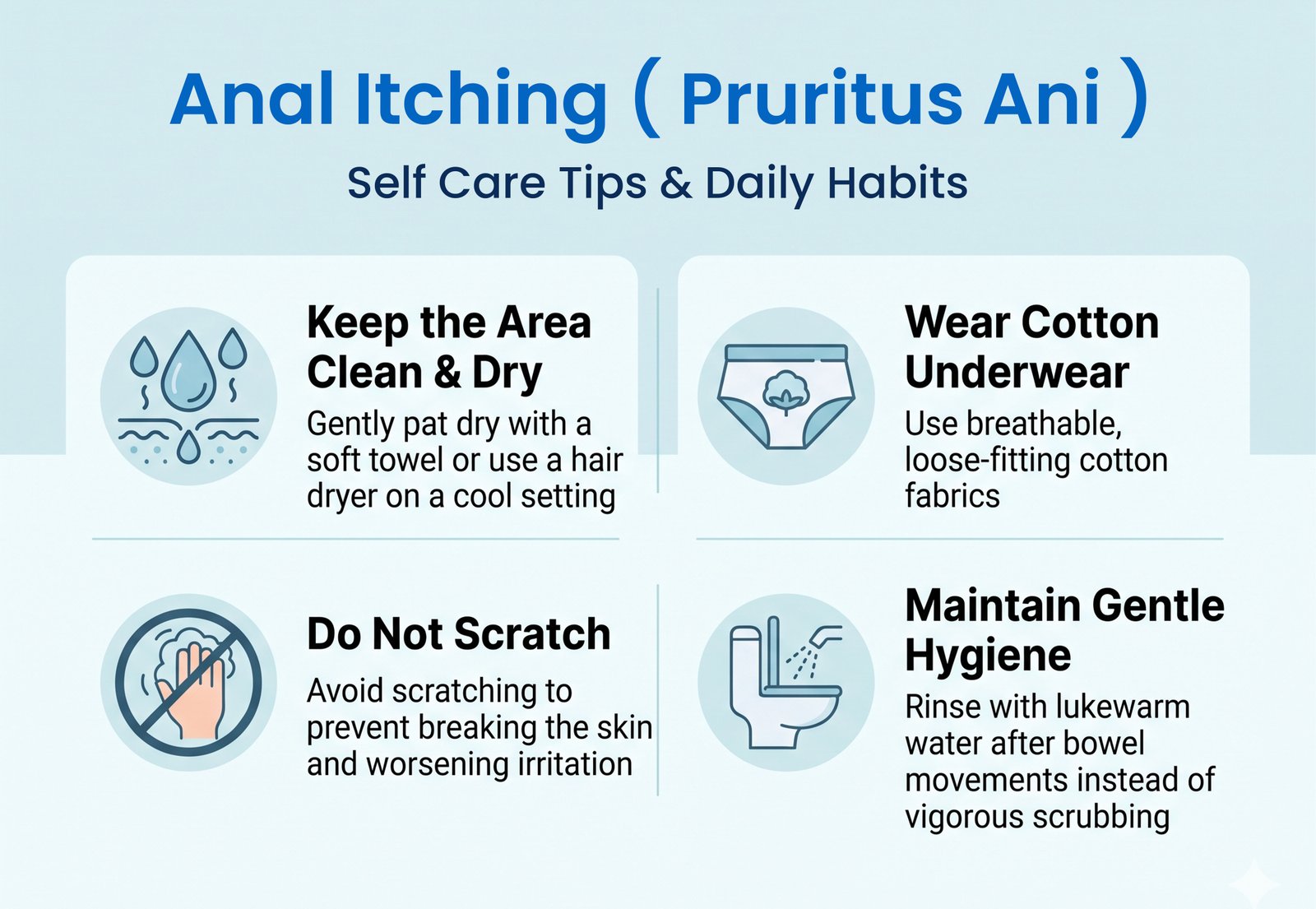
- Keep the area clean and dry. After passing stool, clean gently with plain lukewarm water, then pat dry with a soft cloth or a hair dryer on a cool setting. Do not rub.
- Avoid over-wiping. Wipe gently, and avoid repeated wiping.
- Skip harsh products. Avoid scented soaps, perfumed or alcohol-based wipes, strong antiseptic liquids and talc.
- Do not scratch. Keep nails short. If you scratch in your sleep, some people find that cotton gloves help.
- Wear loose, breathable, cotton underwear and change out of sweaty clothes promptly.
- Rinse and dry after sweating or after a workout.
- Keep stools soft and regular with fibre-rich food and enough water.
- Take care in winter with a gentle routine and loose layers, and avoid very hot water.
Be careful with creams. Steroid creams and antifungal creams can thin or irritate the skin, or hide the real cause, if used for long or without a clear diagnosis. Use them only as a doctor advises. A plain barrier product is sometimes suggested; ask your doctor or pharmacist which suits you.
When to See a Doctor
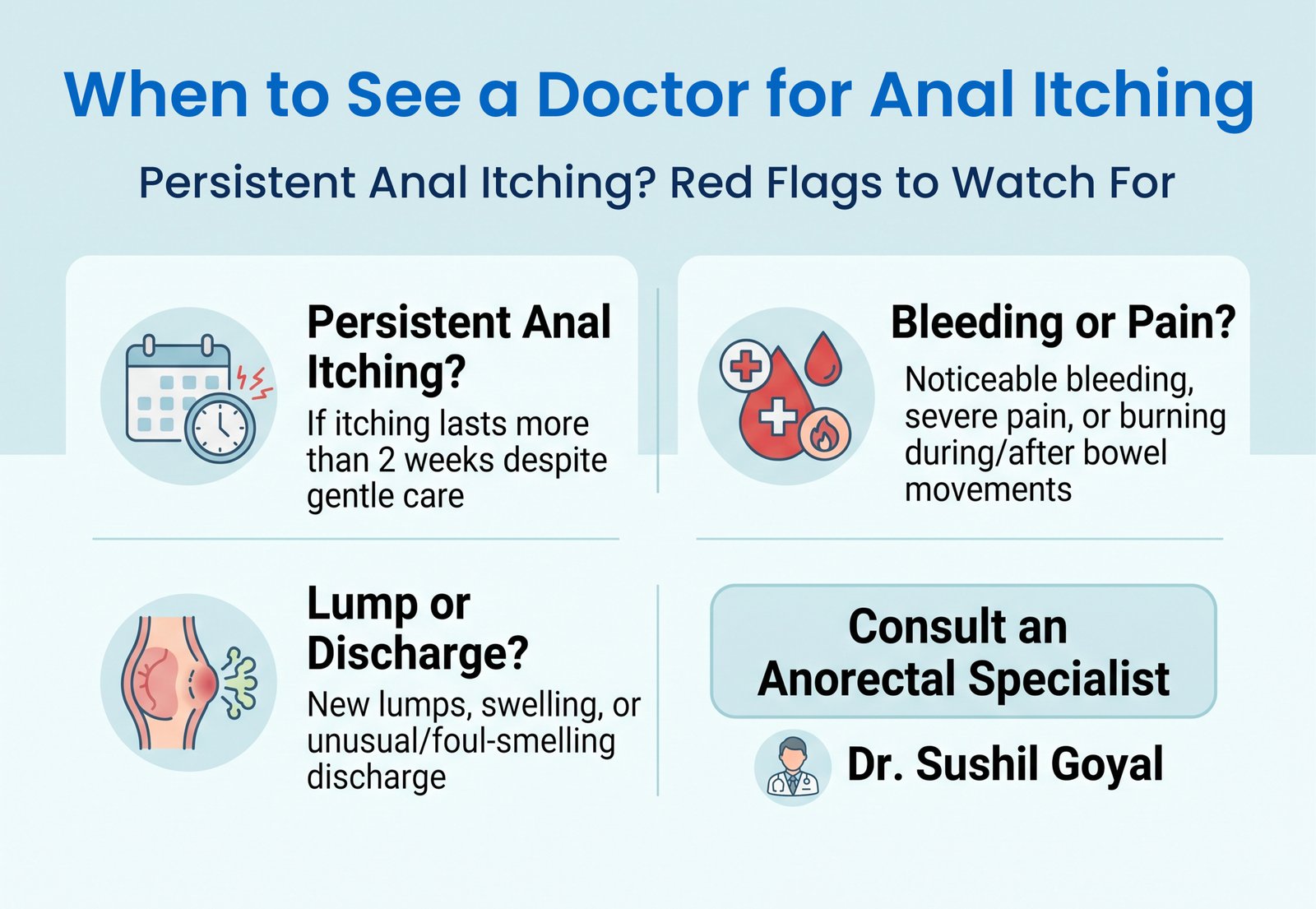
Mild itching often settles with sensible self-care. Please get examined if:
- Itching is severe or constant
- It does not improve after about three to four weeks of self-care
- It keeps coming back
- You notice bleeding, a lump, pain, or discharge or pus near the anus
- There is a rash, a white, thin or shiny patch of skin, or signs of infection
- You have leakage of stool
- A child has night-time itching around the anus
- You have diabetes or another medical condition and the itching is persistent
- You are over 40 and have new rectal bleeding or a change in bowel habits
Seek medical help promptly if itching comes with bloody diarrhoea, pus, fever, or severe pain.
How a Doctor Assesses Anal Itching
The assessment usually starts with questions about your symptoms, your bowel habits, how you clean the area, your diet and your medicines. This is followed by an examination of the skin around the anus and, where needed, a brief internal examination such as proctoscopy.
Depending on what is found, the doctor may advise skin care, treatment for an anorectal condition, a skin swab or other tests, or referral to a skin specialist. Treatment depends on the cause, and results and recovery vary between people.
Common Mix-Ups
“Itching means poor hygiene.” Not necessarily. Over-cleaning can cause itching as easily as under-cleaning, and many cases have other causes.
“Stronger antiseptic means better cleaning.” Strong antiseptic liquids and harsh soaps can irritate the skin and may make itching worse.
“Scratching gives relief, so keep scratching.” Scratching may relieve the itch briefly, but it irritates the skin and can cause small tears.
“Itching in adults means worms.” Pinworms are more common in children. In adults, other causes are more usual.
“Itching means piles.” Piles are one possible cause, but there are many others, which is why an examination helps.
“It is probably nothing, so I can ignore it.” Mild itching often settles, but itching that persists, or comes with bleeding, a lump or discharge, should be examined.
Frequently Asked Questions
Q: Why does my anus itch at night? Itching is often more noticeable at night because you are less distracted and the skin may be warm and moist. Pinworms, which are more common in children, are one cause of night-time itching. If night itching continues, please get it checked.
Q: Can piles cause itching around the anus? Yes, piles can contribute through mucus discharge, moisture and difficulty in cleaning. Itching in piles often comes with bleeding or a soft lump. An examination confirms the cause.
Q: Gudaa mein khujli ka kya karan hota hai? Iske kai karan ho sakte hain: nami aur paseena, zyada saaf karna, kapdon ki ragad, piles, fissure, skin ki bimari ya infection. Sahi karan ek examination se pata chalta hai.
Q: Is anal itching a sign of something serious? Usually it is not. In most people it comes from moisture or irritation. Itching that is severe, persistent, or comes with bleeding, a lump, discharge or other changes should be examined.
Q: Can I use an anti-itch cream? Do not use steroid or antifungal creams for long without a doctor's advice, as they can irritate or thin the skin and hide the cause. A doctor can recommend what suits your situation.
Q: How long should I wait before seeing a doctor? If itching has not settled after about three to four weeks of gentle self-care, or if you have bleeding, a lump, discharge, severe symptoms or a rash, please see a doctor sooner.
Q: Can diet affect anal itching? Some people notice that certain foods or drinks, such as strong tea or coffee, very spicy food or citrus, make itching worse. A food diary helps you see whether this applies to you.
Contact
For an assessment at Goyal Piles Care Centre:
Address: D-12/182, First Floor, Sector 8, Rohini, Delhi – 110085
Near Rohini East Metro Station, opposite Metro Pillar No. 393
Phone / WhatsApp: +91-9999333166
Timings: Monday to Saturday, 9:30 AM to 1:30 PM
Written by Dr. Sushil Goyal, MBBS, FCGP, Piles and Anorectal Specialist, Goyal Piles Care Centre, Rohini, Delhi. Last reviewed: November 2026.
This article is for public education and is not a substitute for medical advice, diagnosis or treatment. Anal itching has many causes, and some are outside the scope of this clinic. Please consult a qualified doctor about your own symptoms.
